

The 10 Most Common Mistakes in IVF (And How to Avoid Them)
An Advanced Guide to Making Smarter, More Informed, and More Strategic Decisions Throughout Your IVF Journey
In vitro fertilization (IVF) is much more than a medical treatment for many couples. It is a journey of hope, patience, emotional resilience, and informed decision-making.
Many couples begin their IVF journey with great optimism. However, as the process progresses, misinformation, misleading advice, rushed decisions, and unrealistic expectations may leave them feeling more exhausted, more anxious, and increasingly uncertain.
When you search online for “common IVF mistakes,” you will often come across superficial recommendations such as:
- “Don’t stress.”
- “Eat healthy.”
- “Think positively.”
- “Listen to your doctor.”
However, modern IVF treatment involves far more than these general suggestions.
A successful IVF journey is not determined solely by the quality of the laboratory. It is shaped by the careful evaluation of multiple factors, including:
- Proper timing
- Personalized treatment planning
- Embryo strategy
- Hormonal management
- Psychological preparation
- Choosing the right fertility clinic
- Genetic testing
- Lifestyle optimization
In this guide, you will learn not only the most common mistakes made during IVF, but also:
- Why these mistakes occur
- How they can affect IVF success rates
- How they can be prevented through a modern IVF approach
- Why data-driven planning plays a crucial role in treatment success
Because an informed patient is one of the strongest contributors to a successful IVF journey.
Understanding the Concept of “Mistakes” in IVF
In IVF, a “mistake” is often not the result of incorrect medical treatment—it is more commonly the result of an ineffective strategy.
Some couples:
- Begin treatment without adequate preparation.
- Rush into choosing a fertility clinic.
- Manage the process based primarily on emotions.
- Fail to fully evaluate their individual fertility profile.
Today’s modern IVF approach goes far beyond standardized treatment protocols.
Successful IVF treatment now involves evaluating multiple factors together, including:
- Hormonal profile
- Age
- Ovarian reserve
- Sperm DNA quality
- Embryo development
- Genetic profile
- Immune system function
- Uterine health
A significant proportion of unsuccessful IVF cycles may result from insufficient information, inadequate planning, and unrealistic expectations.
For this reason, access to accurate information is one of the most critical stages of the IVF journey.
The 10 Most Common Mistakes in IVF (And How to Avoid Them)
1. Starting Treatment Without Proper Preparation
Many couples focus only on starting IVF treatment.
However, a successful IVF journey often begins months before the treatment itself.
In particular:
- An unhealthy lifestyle
- Poor nutrition
- Vitamin deficiencies
- Chronic stress
- Smoking and alcohol consumption
can negatively affect both egg quality and sperm quality.
How Can You Prevent This?
- Complete your hormonal evaluation in advance.
- Assess your AMH level and semen analysis results.
- Plan a preparation period of at least 2–3 months.
- Improve your sleep quality.
- Follow a personalized nutrition plan.
- Begin stress management early.
Because IVF success does not begin on embryo transfer day—it begins during the preparation phase.
2. Choosing a Fertility Clinic Based Only on Success Rates
Many couples focus exclusively on advertisements promoting high IVF success rates.
However, a high published success rate does not necessarily mean that a clinic is the best choice for every patient.
Some fertility centers may report higher success rates by:
- Accepting less complex cases
- Limiting treatment for women of advanced maternal age
- Working with carefully selected patient groups
How Can You Prevent This?
When choosing a fertility clinic, evaluate factors such as:
- Age-specific success rates
- Embryology laboratory quality
- Availability of PGT (Preimplantation Genetic Testing)
- Time-lapse embryo monitoring technology
- Experience of fertility specialists
- Quality of patient communication
- Transparency throughout the treatment process
The right fertility clinic should provide not only strong success rates, but also trust, advanced technology, and comprehensive patient care.
3. Misunderstanding the Impact of Age
Age is undoubtedly an important factor influencing IVF success.
However, it is not the only determining factor.
Some younger women may have diminished ovarian reserve, while some women of advanced reproductive age may still produce high-quality embryos.
For this reason, focusing solely on age can be misleading.
How Can You Prevent This?
- Have your AMH level evaluated.
- Assess your Antral Follicle Count (AFC).
- Review your Sperm DNA Fragmentation Analysis if indicated.
- Request an individualized assessment of your expected success rate.
- Plan the timing of treatment strategically.
Modern IVF no longer relies solely on chronological age—it is increasingly guided by each patient’s unique biological profile.
4. Poor Stress Management During IVF
The IVF journey is not only physically demanding—it is also emotionally challenging.
Constantly waiting for results, fearing failure, and dealing with social pressure can gradually develop into chronic stress.
High levels of stress may:
- Increase cortisol levels
- Disrupt sleep patterns
- Affect hormonal balance
- Reduce overall quality of life
How Can You Prevent This?
- Practice breathing exercises.
- Incorporate meditation or mindfulness techniques.
- Seek professional psychological support when needed.
- Maintain a consistent sleep routine.
- Limit exposure to social media.
- Rely on your partner’s emotional support.
Remember, you do not have to appear strong throughout the IVF journey. Sometimes asking for support is one of the strongest decisions you can make.
5. Overlooking Nutrition and Lifestyle
Nutrition plays a direct role in:
- Egg quality
- Sperm health
- Cellular energy production
- Embryo development
Likewise, certain lifestyle habits can negatively affect IVF outcomes.
These include:
- Processed foods
- Excessive sugar consumption
- Smoking
- Alcohol use
- Irregular sleep patterns
Supportive Nutrients
The following nutrients may help support reproductive health:
- Omega-3 fatty acids
- Folic acid
- Zinc
- Coenzyme Q10 (CoQ10)
- Antioxidants
- Vitamin D
A healthy lifestyle is one of the most powerful yet often overlooked contributors to IVF success.
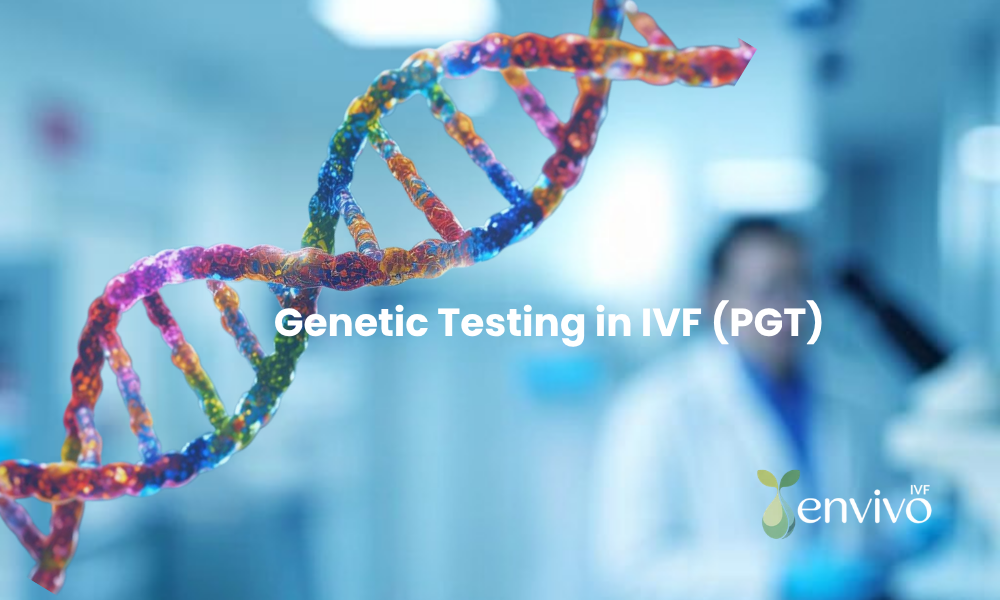
6. Underestimating the Importance of Genetic Testing
Some couples consider genetic testing, such as Preimplantation Genetic Testing (PGT), to be an unnecessary expense.
However, PGT may provide significant advantages, particularly for:
- Women over the age of 35
- Couples with recurrent miscarriages
- Patients with repeated IVF failures
- Families with a history of genetic disorders
Benefits of PGT
- Selection of chromosomally healthy embryos
- Reduced risk of miscarriage
- Optimization of embryo transfer strategy
- Lower risk of repeated implantation failure
Modern IVF is no longer focused solely on creating embryos—it is about selecting the healthiest embryo with the highest potential for a successful pregnancy.
7. Expecting Success After a Single IVF Cycle
Many couples view IVF as a one-time solution.
In reality, IVF is often a process that requires:
- Careful analysis
- Data collection
- Continuous optimization
- Strategic replanning
Every IVF cycle provides valuable clinical information.
These findings may help optimize:
- Medication protocols
- Embryo transfer strategies
- Embryo selection methods
A failed IVF attempt should not always be viewed as a loss.
In many cases, it provides essential information that can significantly improve the chances of success in future treatment cycles.











)